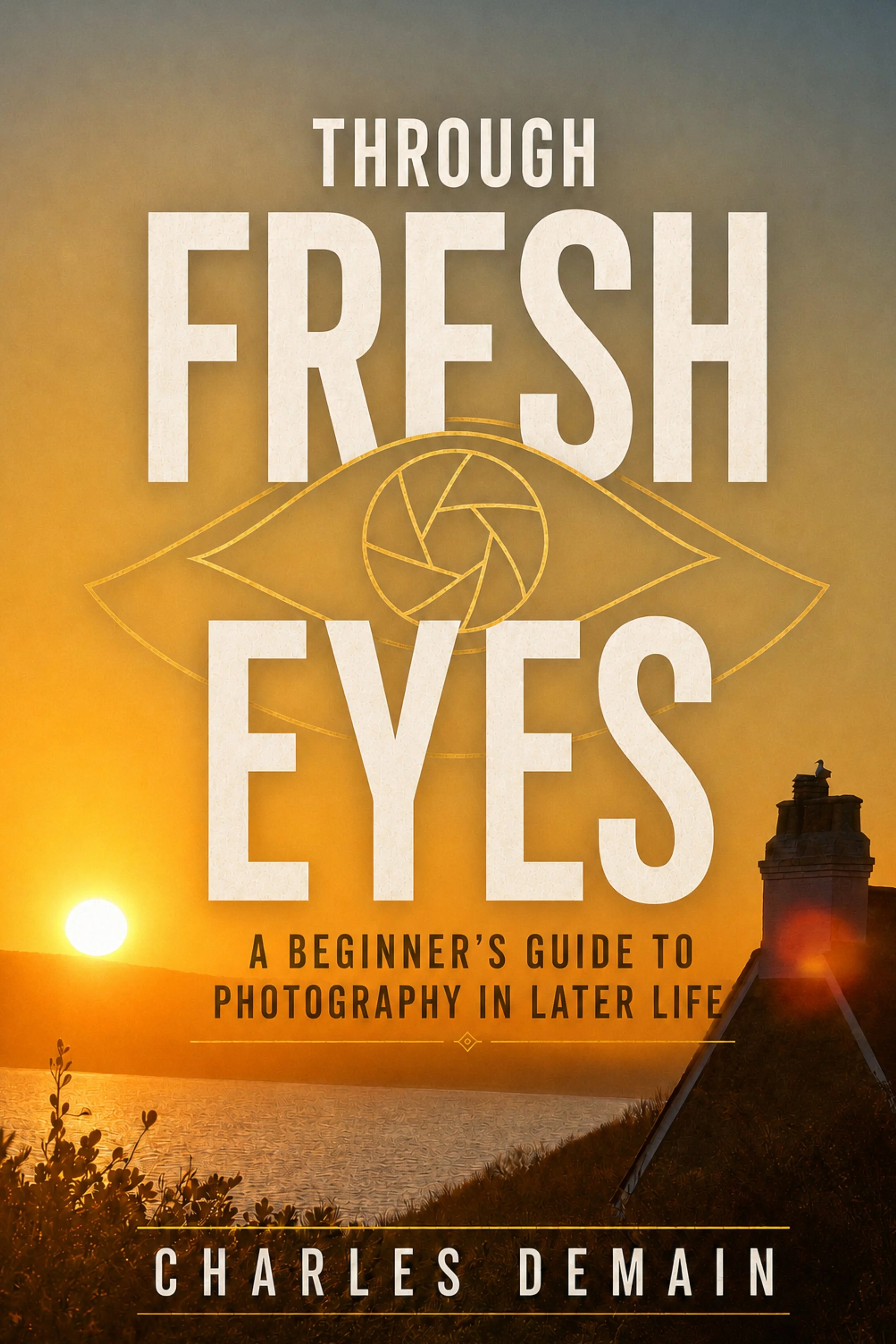
Through Fresh Eyes - A beginners guide to Photography in later life
Out now in paperback and on Kindle.
You've retired, or you're close to it. You have a bit more time than you used to, and a phone that can take far better pictures than most of the ones you end up with. You'd like to take a decent photograph. You just don't want to wade through jargon, spend a fortune on kit or be talked down to.
This book is for you. You can start with the camera already in your pocket.
What the book will help you do
• Find good photographs in ordinary places and everyday moments
• Understand light and use it to make your pictures stronger
• Tell stories with photos of people, places and the world around you
• Edit simply, without getting lost in complicated menus
• Learn the few camera settings that give you real control
• Develop your own eye, rather than copying someone else's idea of a good photo
There are also practical ideas for getting out with your camera, small projects to start, and subjects close to home.
Who it's for
Anyone in later life who has never really learned photography, or tried once and gave up. You don't need young eyes, steady hands, expensive equipment or a technical mind.
Why I wrote it
I bought my first camera when I was 17 and have been taking photos, on and off, for over 50 years. Most photography advice assumes you're 30, want to go professional and have money to spend. I wanted a book for the rest of us.
A taste of the book
In this quick post I want to talk about a setting that’s already in your phone but is probably switched off.
It’s called the grid. Go into your camera settings and turn it on — on an iPhone it’s usually under Settings > Camera > Grid. On Android it’s usually in the camera app itself, under a small settings icon. Once it’s on, you’ll see two lines running across your screen and two running down, dividing it into nine boxes, like the noughts and crosses grid.
The most common mistake that people new to photography make is to put everything slap bang in the middle of the frame. That grid is there to help stop you doing that.
Most of us put the subject — a face, a boat, a church spire — dead centre and take the shot. There’s nothing wrong with doing it, but it rarely produces the most pleasing photograph. Move that same subject onto one of the lines, or better still, onto one of the four points where the lines cross, and the photo has new impact. Your eye is led to the subject instead of stopping at the middle of the picture.
For the rest of the post go to my substack
Keep learning
I write a free newsletter every couple of weeks with one short, practical photography idea, plus the occasional piece on life after work.
Also by Charles Demain
The Next Twenty Years: A Practical Guide for Men Reinventing Life After Full-Time Work.